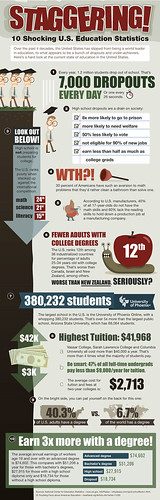

(best viewed at 800 x 600)


http://www.shambles.net
 
  Education Statistics

Social Media Stats Visualized
http://mashable.com/2009/08/14/social-media-stats-visualized/
Social Media Stats Visualized
Down arrowUp arrow
grey line
Younger Voice is a SurveyDigital project
http://www.youngervoice.co.uk/
Younger Voice is a SurveyDigital project
Ethical Research and User-Testing, with verified, representative, secure communities of 6 to 14 year olds
Discover ways in which the opinions of children - aged from 6 to 14 - can help you to formulate policy, decide marketing strategies or test online services. Work cost-effectively and with complete confidence that the children you are polling are safe, genuinely children and broadly representative of their peers. This is an active, living community of digital natives, who will set the trends of tomorrow.
Browse the results of previous research projects, discover the demographics of our children, establish ways in which your projects could benefit from Test Zones and learn how SurveyDigital works in partnership with Intuitive Media to bring this carefully monitored and mentored service to you.
Down arrowUp arrow
grey line
UK Fact Sheets : Education
http://tinyurl.com/yo2rqp
UK Fact Sheets : Education
This ESRC fact sheet provides a statistical overview of education in the UK. It is designed to introduce the topic rather than be a comprehensive summary.
Other factsheets in this series may be of interest, including Home Learning, the Knowledge Economy and Skills.
Down arrowUp arrow
grey line
Crime and Safety Surveys (USA)
http://nces.ed.gov/pubsearch/getpubcats.asp?sid=108
National Center for Education Statistics: Crime and Safety Surveys (CSS) USA
"Compilation of school crime and safety data and reports, including the annual Indicators of School Crime and Safety (2002 to the present), and surveys of principals, teachers, and students.
Includes reports on student discipline, victimization, gangs, bullying, weapons, drugs, and other school violence and crime topics.
From the National Center for Education Statistics, U.S. Department of Education."
Down arrowUp arrow
grey line
ICT in Schools Statistics (USA)
http://www.schooldata.com/pdfs/Key_Findings_ADS_Report.pdf
ICT in Schools Statistics (USA)
America? Digital Schools 2006: A Five-Year Forecast provides your business with insight and analysis on the growth in one-to-one computing and extensive forecast of growth in purchasing by 2011. Through an exclusive distribution agreement with the study? authors, MDR customers can order this highly anticipated, 182-page report, including more than 250 data tables and charts, online now at www.schooldata.com
Down arrowUp arrow
grey line
World Education Chart 2003
http://www.gapminder.org/index.html#softwares
World Education Chart 2003
Education data about the world 1970-2000
This chart has amazing dynamics graphics
Down arrowUp arrow
grey line
Information systems (UNESCO)
http://www.unesco.org/iiep/eng/focus/infosys/infosys_1.htm
Information systems (UNESCO)
Decision-makers need reliable information on schools, students, personnel and resources
Too often, the data produced is limited to an all too sparse statistical yearbook. Good management presupposes not just the collection, but also the evaluation of the information needs of users.
It also calls for the selection, organization, presentation, and communication of indicators that can make a difference in decision-making.
Technical support is provided by UNESCO to countries seeking to improve their educational information systems. IIEP assists them in:
- evaluating their information needs improving procedures for collecting and processing data
-supporting statistical publications and systems of indicators that will better serve the end users.
Down arrowUp arrow
grey line
School Teachers' Review Body (UK) Statistics
http://tinyurl.com/pk5ft
School Teachers' Review Body Statistical tables as annex to the 2005 written evidence from the DfES (UK)
Teacher numbers (FTE) in the maintained schools sector, 2005 | Part-time qualified teachers in maintained nursery, primary, secondary and special schools, 1985 to 2005 | Supply teachers employed in maintained nursery, primary and secondary schools, 1985 to 2005 | Full-time equivalent (FTE) of support staff, England, 2005 | Pupil-teacher ratios and class contact ratios in maintained nursery, primary and secondary schools, 1995 to 2005 | Class sizes in maintained primary and secondary schools, 1997 to 2005 | Recruitment to initial teacher training courses, 2000/01 to 2004/05 | Retirement of teachers from the maintained schools sector, 1989-90 to 2004-05 | Vacancy rates in schools | Teachers' Pay Tables | Full-time heads and deputy heads by school group, 1997 to 2004 | Age profile of UK teachers | Percentage distribution of full-time teachers in the maintained schools sector on the classroom teachers' pay spine by school type, 2004
Down arrowUp arrow
grey line
UNESCO : International Bureau of Education
http://www.ibe.unesco.org/DBA.htm
UNESCO : International Bureau of Education
World Data on education (WDE) focuses on basic descriptions of the main characteristics of the organization and functioning of national education systems.
Down arrowUp arrow
grey line
Librarian's Index (USA)
http://tinyurl.com/ovgkr
Librarian's Index (USA) ... list of over 100 education statistics resources and links.
Down arrowUp arrow
grey line
Education for All : UNESCO Statistics Worlwide
http://gmr.uis.unesco.org/
Education for All : UNESCO Statistics Worlwide
Every year, the EFA Global Monitoring Report assesses where the world stands on its commitment to provide a basic education to all children, youth and adults by 2015.Developed by an independent team and published by UNESCO, the report is an authoritative reference that aims to inform, influence and sustain genuine commitment towards education for all.
This tool, developed by the UNESCO Institute for Statistics in partnership with the EFA Global Monitoring Report team, is based on the data contained in the 2006 statistical annex tables. It enables you to search by table, theme, indicator, country and region, and to export results into an Excel format.
Down arrowUp arrow
grey line
ICT in Schools in England 2004
http://www.dfes.gov.uk/rsgateway/DB/SFR/s000480/index.shtml
Information and Communications Technology in Schools in England 2004
This release updates to 2004 the information on numbers and expenditure in SFR18/2003 "Information and Communications Technology in Schools in England 2003 (Provisional)".
Down arrowUp arrow
grey line
Trends in International Mathematics and Science Study (TIMSS)
http://www.pisa.oecd.org/dataoecd/5/45/35920726.pdf
International surveys OECD-PISA
Trends in International Mathematics and Science Study (TIMSS) and
Progress in International Reading Literacy Study (PIRLS)
41 countries which took part in PISA 2003
Explaining Student Performance | Evidence from the international PISA, TIMSS and PIRLS surveys
Final Report November 2005
Down arrowUp arrow
grey line
Internet Usage Statistics
http://www.internetworldstats.com/stats.htm
Internet Usage Statistics ... World Internet Users and Population Stats
Down arrowUp arrow
grey line
Worldwide Education Statistics at NationMaster
http://www.nationmaster.com/cat/Education
Worldwide Education Statistics at NationMaster
An amazing set of statistics with breakdowns into specific areas such as e.g.:
Class Size | Educational Spending | Educational Attainment | Gender | Teachers | Hours of instruction | how long school day | Library Books | library employees | Literacy Definitions | salary | salaries | enrolment | time spent on different subjects | spending on teaching materials | number of stuents with calculators | single parent families |
Down arrowUp arrow
grey line
PISA : Program for International Student Assessment
http://www.pisa.oecd.org
Program for International Student Assessment PISA .. OECD Programme
Are students well prepared to meet the challenges of the future? Are they able to analyse, reason and communicate their ideas effectively? Do they have the capacity to continue learning throughout life? Parents, students, the public and those who run education systems continually ask these questions.
PISA, a three-yearly survey (2000, 2003, 2006...) of 15-year-olds in the principal industrialised countries, provides some answers. It assesses how far students near the end of compulsory education have acquired some of the knowledge and skills that are essential for full participation in society.
Down arrowUp arrow
grey line
Projection of uSA Education Statistics to 2013
http://nces.ed.gov/programs/projections/index.asp
Projection of uSA Education Statistics to 2013
Total public and private elementary and secondary school enrollment reached a record 54 million in fall 2001, representing a 19 percent increase since fall 1988. Between 2001 and 2013, a further increase of 5 percent is expected, with increases projected in both public and private schools. In the regions, increases are expected in the West, South, and Midwest, and a decrease is expected in the Northeast.
Down arrowUp arrow
grey line
Media in the Lives of 8-18 Year-olds
http://www.kff.org/entmedia/entmedia030905pkg.cfm
Generation M: Media in the Lives of 8-18 Year-olds
A national Kaiser Family Foundation survey found children and teens are spending an increasing amount of time using ?ew media?like computers, the Internet and video games, without cutting back on the time they spend with ?ld?media like TV, print and music.
The study, Generation M: Media in the Lives of 8-18 Year-olds, examined media use among a nationally (USA) representative sample of more than 2,000 3rd through 12th graders who completed detailed questionnaires, including nearly 700 self-selected participants who also maintained seven-day media diaries.
Found that students in grades 3-12 spend an average of six hours and twenty-one minutes plugged in to some type of media each day. Accounting for multitasking, the figure jumps to about eight and a half hours when you include nearly four hours of TV viewing and forty-nine minutes of video game play. Comparatively, homework gets slightly less than fifty minutes of attention.
For this digital generation, electronic media is increasingly seductive, influential, and pervasive, yet most schools treat the written word as the only means of communication worthy of study. Therefore, most American students remain poorly equipped to think critically about, and express themselves through, the media that defines them.
Down arrowUp arrow
grey line
Rankings of the States 2004 and Estimates of School
http://www.nea.org/edstats/images/05rankings.pdf
Rankings of the (USA) States 2004 and Estimates of School Statistics 2005
NEA Research June 2005
The data presented in this combined report―Rankings & Estimates―provide facts about the extent local, state, and national governments commit resources to public education. As one might expect in as diverse as the United States?ith respect to economics, geography, and politics?he level of commitment education varies on a state-by-state basis. Regardless of these variations, improvements in public education measured by summary statistics.
Thus, NEA Research offers this report to its state and local affiliates as researchers, policymakers, and the public as a tool to examine public education programs and services.
Down arrowUp arrow
grey line
The Research Informed Practice Site (TRIPS) UK
http://www.standards.dfes.gov.uk/research/
The Research Informed Practice Site (TRIPS) UK
This site offers easy access to essential research findings for teachers, governors, parents and all those who support them in the education of school age students.
Our aim is to help you make sure that practice and policy in schools, and at a regional and national level, are informed by good and up-to-date evidence.
Much of this evidence can found in research journals and other sources that take time, energy and often money to access. This site takes articles from research journals and summarises them with the needs of practitioners in mind.
Down arrowUp arrow
grey line
Surveys on Children, Young People and the Internet
http://www.children-go-online.net/
Surveys on Children, Young People and the Internet
Down arrowUp arrow
grey line
Percentage of time spent on each subject
http://www.icteachers.co.uk/resources/resources_policies.htm
An Excel spreadsheet, from Neil Whitmill, that calculates the percentage of time spent on each subject. Useful for Ofsted! Separate calculations for KS1 & KS2
Down arrowUp arrow
grey line
Teacher Statistics USA
http://tinyurl.com/3h5t3
Teacher Statistics USA | Number of all teachers | % women | Average annual salary |
Down arrowUp arrow
grey line
SchoolMatters (USA)
http://www.schoolmatters.com/
SchoolMatters gives policymakers, educators, and parents the tools they need to make better-informed decisions that improve student performance. SchoolMatters will educate, empower, and engage education stakeholders.
Policymakers, educators, and individual parents are working hard to improve our schools, and they deserve respect and gratitude for taking on such a difficult challenge. However, education leaders are often forced to make critical decisions based on incomplete information, simply because there hasn't been a national, easily searchable clearinghouse for education information and analysis-until now.
education | statistics | usa |
Down arrowUp arrow
grey line
Digest of Education Statistics (USA)
http://nces.ed.gov/programs/digest/
The primary purpose of the Digest of Education Statistics is to provide a compilation of statistical information covering the broad field of American education from prekindergarten through graduate school. The Digest includes a selection of data from many sources, both government and private, and draws especially on the results of surveys and activities carried out by the National Center for Education Statistics (NCES).
Down arrowUp arrow
grey line
PANDA (UK)
http://www.ofsted.gov.uk/publications/index.cfm?fuseaction=pubs.summary&id=3760
The PANDA provides a school each year with its own school level data, and national (contextual) data, together in one document. The national contextual data comes from a variety of sources, and can be used to compare your school with other schools and to help with your own self-evaluation. It also shares with headteachers data collected from schools and currently held centrally by Ofsted.
Down arrowUp arrow
grey line
PISA Study by OECD
http://www.pisa.oecd.org/
International survey of education standards : by the OECD (Organisation for Economic Co-Operation and Development) is known as PISA.
It compares the performance of 15-year-olds in maths, literacy and science and comes out every three years.
Are students well prepared to meet the challenges of the future? Are they able to analyse, reason and communicate their ideas effectively? Do they have the capacity to continue learning throughout life?
These are questions that parents, students, the public and those who run education systems continually ask. PISA, a three-yearly survey (PISA 2000, PISA 2003, PISA 2006...) of the knowledge and skills of 15-year-olds in the principal industrialised countries, provides some answers.
It assesses how far students near the end of compulsory education have acquired some of the knowledge and skills that are essential for full participation in society.
Down arrowUp arrow
grey line
NFER's Annual Survey of Trends in Education (UK)
http://buildingthegrid.becta.org.uk/index.php?resId=975#res975
NFER's Annual Survey of Trends in Education (UK)
NFER's Annual Survey of Trends in Education compares the views of primary headteachers on current educational issues over the last 10 years. One section of the report is concerned with access to technology and includes the following findings ....
Down arrowUp arrow
grey line
UNESCO Institute for Statistics
http://www.uis.unesco.org/countryprofiles/html/selectCountryProfile_en.aspx
UNESCO Institute for Statistics
September 20, 2004 (UNESCO Institute for Statistics) - Profiles featuring the latest key statistics and indicators on education available online on a country-by-country basis.
Down arrowUp arrow
grey line
Annual Survey of Trends in Education (UK 2004)
http://www.nfer.ac.uk/research/surveyoftrends.asp
Annual Survey of Trends in Education
This survey, the tenth Annual Survey of Trends in Education from NFER, based on responses from over 600 primary headteachers, provides a unique insight into their views on a variety of current issues in education. Budgets have been a top priority in previous years, and the percentage of heads citing this as a concern this year is the highest since the survey began. Other areas for concern include expenditure on administrative support, as well as a lack of time and resources for teachers' professional development. In this survey, for the first time, heads were asked for their views on the balance of the curriculum; the most common changes they would like to make include: more time on creative subjects; more cross-curricular work; and greater flexibility in the curriculum.
The survey reveals that Primary heads feel that interactive whiteboards and the internet have the potential to improve teaching and learning, although only half the Heads actually had an interactive whiteboard in their school. The majority of heads also feel that, potentially, teaching and learning could be improved via the use of email, the school intranet and the LEA intranet. The survey reports that very few schools in the survey had access to videoconferencing or integrated learning systems and less than half of the heads perceived these forms of technology as having the potential to improve teaching and learning.
Down arrowUp arrow
grey line
Countries with the highest and lowest military burden
http://web.sipri.org/contents/milap/milex/mex_burden.html
Countries with the highest and lowest military burden in 2002;a social and military expenditure as a share of gross domestic product, 2000-2002
Down arrowUp arrow
grey line
The School Information Partnership (USA)
http://www.schoolresults.org/
The School Information Partnership (USA)
The School Information Partnership is a public-private collaboration designed to empower parents, educators and policymakers to use the No Child Left Behind (NCLB) data to make informed decisions and improve school results. Standard & Poor's created the website which includes a suite of interactive analytical tools from Standard & Poor's School Evaluation Services and the National Center for Educational Accountability's Just for the Kids. For schools, districts and states across the nation, the website will display available data required to be publicly reported under NCLB.
Down arrowUp arrow
grey line
UK - Neighbourhood Statistics
http://neighbourhood.statistics.gov.uk/default.asp?nsid=false&CE=True&SE=True
UK - Neighbourhood Statistics
Use this site to view, compare or download statistics for local areas on a wide range of subjects including population, crime, health and housing.
Down arrowUp arrow
grey line
US Statistics 2003
http://www.washtimes.com/national/20030811-100201-6119r.htm
The 2003 U.S. Census report crunched the education numbers - One out of every four U.S. residents over the age of three is a student. The number of schoolchildren is more than 53 million. Among children ages 5-17, 10 percent attend private school; 850,000 are home-schooled, and 267,000 students attend the 1,010 charter schools nationwide.
Ninety-eight percent of our schools have Internet access ?that figure was 50 percent in 1995. Four out of five children ages 6-17 use computers at school, with four children, on average, sharing one school computer. Two out of three have access to a computer at home.
Down arrowUp arrow
grey line
Education Resource Organizations Directory (USA)
http://bcol02.ed.gov/Programs/EROD/
This directory includes thousands of organizations that provide services on a state, regional, or national level.
If you're a teacher, you can use the Education Resource Organizations Directory to find organizations that provide information and assistance on many education-related topics, such as multicultural education, at risk persons, standards, teaching methods, and much more. Try starting with keyword "teachers." (You'll probably retrieve far too many records with this broad a search, but it will get you started!) You can also utilize the advanced search option to find organizations that provide curriculum guide services.
If you're a librarian, you can access the Education Resource Organizations Directory to help patrons find resource organizations on a whole host of education-related topics. You can search on "library agency" to find out which libraries have ERIC collections. To find ERIC collections in your area, try searching "library agency" and "your state" as a simple search.
Down arrowUp arrow
grey line
Country Profile -- search for schools or education
http://memory.loc.gov/frd/cs/cshome.html
Country Profile -- search for schools or education
This website contains the on-line versions of books previously published in hard copy by the Federal Research Division of the Library of Congress under the Country Studies/Area Handbook Program sponsored by the U.S. Department of Army.
Because the original intent of the Series' sponsor was to focus primarily on lesser known areas of the world or regions in which U.S. forces might be deployed, the series is not all-inclusive.
Down arrowUp arrow
grey line
Edstats : Country Data - Summary Education Profiles
http://devdata.worldbank.org/edstats/cd1.asp
Edstats : Country Data - Summary Education Profiles
Worldbank
Down arrowUp arrow
grey line
UNESCO Institutes for Stats - Education
http://portal.unesco.org/uis/ev.php?URL_ID=2867&URL_DO=DO_TOPIC&URL_SECTION=201
UNESCO Institutes for Stats - Education
Global and internationally comparable statistics on education, science, technology, culture and communication.
Down arrowUp arrow
grey line
Literacy Facts and Figures : Asia and the Pacific
http://www.accu.or.jp/litdbase/stats/index.htm
Literacy Facts and Figures : Asia and the Pacific
The information at regional and national levels is the latest data taken from UNESCO and other international organisations, in particular UN, UNICEF and the World Bank. Some national level data that are not available from the international organisations, and all sub-national level data are officially derived from the government literacy agencies of the participating countries.
Down arrowUp arrow
grey line
National and international data sources and links
http://unstats.un.org/unsd/methods/inter-natlinks/sd_natstat.htm
National and international data sources and links
National statistics links | International statistics links | References for international statistics | National publications and statistical yearbooks | current statistics and Internet sites |
Down arrowUp arrow
grey line
UNESCO Statistical Yearbook
http://www.uis.unesco.org/en/stats/statistics/yearbook/tables/ed.htm
UNESCO Statistical Yearbook
National education systems | Estimated illiteracy rate and illiterate population aged 15 years and over | Pre-primary education: teaching staff and enrolment | Enrolment by level of education | Teaching staff by level of education | Gross enrolment ratios by level of education |
Down arrowUp arrow
grey line
OECD
http://www.oecd.org/EN/about/0,,EN-about-0-nodirectorate-no-no-no-0,00.html
Portal to all population, demography, family planning and reproductive health Websites from all over the world as well as offer electronic libraries, latest demographic and population statistics, databases, and POPIN network sites.
OECD |
Down arrowUp arrow
grey line
CensusAtSchool - an International Children's Census
http://www.censusatschool.ntu.ac.uk/
CensusAtSchool - an International Children's Census
Collecting and disseminating real data for use by teachers and pupils in data-handling and ICT learning and teaching.
?he Royal Statistical Society Centre for Statistical Education at Nottingham Trent University has been running its international CensusAtSchool project for nearly three years.
Data are collected from pupils?aged 7 to 16, using simple online questionnaires. These data enable us to develop web-based and curriculum resources that can help teachers improve both ICT and mathematical skills. The Centre also runs train-the-trainer and regular training courses in these areas for teachers, consultants and advisers.
education | statistics | ICT | IT | UK | South Africa | Australia | New Zealand |
Down arrowUp arrow
grey line
ICT in UK Schools Standards Fund 2003-2004
http://www.dfes.gov.uk/standardsfund/grant601.htm
ICT in Schools Standards Fund - Guidance for Schools and LEAs 2003-2004
The reason for a budget paper being listed here is that it sets some useful ICT government targets e.g.
1.The 2004 targets are for average computer:pupil ratios of 1:8 in primary schools and 1:5 in secondary schools. This target includes pupils in secondary school 6th forms.
3.As a condition of receipt, the grant must be used to achieve the computer:pupil ratio targets for 2004. The school level allocation is a matter for local decision that reflects the LEA ICT development plan and LEAs operate their own policies when determining these allocations.
Down arrowUp arrow
grey line
Trends In Education and Skills (uk)
http://www.dfes.gov.uk/trends/
Trends In Education and Skills
This web site offers easy access to a range of statistical evidence across the whole of the education spectrum, from the early years through to adult learning. It is recommended as a starting point for anyone wishing to obtain statistical information on the subject of Education and Skills.
Information is grouped into 5 educational "themes": context, expenditure, schools, post-16 learning and attainment & outcomes. Each consists of a number of indicators representing important issues within each theme.
Each indicator consists of a brief summary; some charts or graphs, each with bullet points to describe the main statistics and trends; some background information to aid understanding; a list of source publications for further reading, and at least one contact from whom more detailed information can be obtained.
Each chart is accompanied by a link to the underlying data in the form of printable Excel tables.
education | statistics | uk |
Down arrowUp arrow
grey line
Global Educational Database (GED)
http://qesdb.cdie.org/ged/index.html
Global Educational Database (GED) at The United States Agency for International Development
GED Online is designed to provide education data in two ways. Users can select a single indicator for multiple years and multiple countries by clicking on one of the bulleted groups of indicators under the UNESCO or DHS headings.
Users who are interested in accessing multiple indicators for one country should click on the bulleted link under the Create Country Table heading.
In an effort to make current and future education data even more accessible, HCD has developed this web-based version of the GED. All of the data can now be accessed online from this site without downloading a program.
education | educational | statistics | Primary Education | Secondary Education | Tertiary Education | Outcomes: Literacy | Resources | Socio-Economic Context | Outcomes: Attainment & Literacy |
Down arrowUp arrow
grey line
Technology in Education 2002 (USA)
http://www.schooldata.com/publications3.html
Technology in Education 2002 presents MDR's annual survey results of the current state of technology in U.S. public schools. Topics include computer usage, DVDs, networking, Internet access, teacher skill level, Internet purchasing, and expenditures.
IT | ICT | USA | statistics | computer | technology spending |
Down arrowUp arrow
grey line
ICT in Schools in England 2002
http://www.dfes.gov.uk/statistics/DB/SFR/s0347/index.html
Information and Communications Technology in Schools in England: 2002
- 99% of schools are now connected to the Internet
- Primary ratio is 1:9.7 ?up from 1:11 (2004 target is 1:8)
- Secondary is 1:6 ?up from 1:8 (2004 target is 1:5)
- Teacher confidence is up in secondary - 80% - unchanged in primary - 76%
england | IT | ICT | statistics | 2002 | dfes |
Down arrowUp arrow
grey line
Schools - Achieving Success UK
http://www.dfes.gov.uk/achievingsuccess/
This White Paper sets ICT performance targets for 14-year-olds for 2004 (75% to achieve level 5) and 2007 (85%) and asks schools and LEAs to set annual performance targets for 14-year olds in ICT as part of the Key Stage 3 strategy.
The Schools – achieving success White Paper is a significant package for the reform of secondary education. It sets out our vision for the education service for the years ahead, building on the excellent foundations laid over the past four years.
ICT | reform | Reform in progress | Achieving high standards for all – supporting teaching and learning | Meeting individual talents and aspirations at 14–19 | Excellence, innovation and diversity | Decisive intervention to ensure high standards | Valuing and supporting teachers in schools | Modernising our structures |
Down arrowUp arrow
grey line
Key ICT targets for LEAs and schools UK
http://buildingthegrid.becta.org.uk/docs/ict_targets.doc
This document details the key ICT targets that LEAs and schools should be aiming for.
· “by 2002 most school leavers should have a good understanding of ICT, based firmly on the standards prescribed in the curricula operating in the various parts of the UK, and there should be measures in place for assessing the level of school leavers' competence in ICT;”
Internet access and computer: pupil ratios | Broadband | Email addresses | Information Management Strategy (IMS) | Teachers and Librarians ICT knowledge and skills | Internet Access | IMS: 2005 Targets | Access in deprived neighbourhoods | Equipping Individuals with the ICT Skills | Use of classroom assistants and technicians | Community Access to Lifelong Learning (CALL) Strategy |
Down arrowUp arrow
grey line
..click for more links on this subject => more websites


use this box to search more on Shambles or on the Web : (powered by Google) : safe filtering is ON
Google  
Web Shambles Website
Use this form to submit links to add to the list above (the webmaster will check the link before publication)
 Heading:
 Address:
 Please copy
 Security Code:
    
 Description:
grey line
webkeeper: Chris Smith csmith@csmith.info Shambles RSS Feed :
(50 entries) | Click here to report broken links or problems |
grey line

webpage with others

Forward to ...

Web 2.0 in Teaching and Learning on the Shambles website

The Shambles 'Forest of Theme Blogs'

Podcasts and Podcasting on Shambles

Shambles newsletter

Workshops offered by Chris Smith

Chris Smith's Personal Learning Network

Second Life ... 3D online virtual world

International Schools Island in Second Life

© copyright
The Education Project Asia


Follow me on Twitter : Shamblesguru


| Shambles Home | Brunei Schools : bn | Burma/Myanmar Schools : mm | Cambodia Schools : kh | China Schools : cn | Hong Kong Schools : hk | India Schools : in | Indonesia Schools : id | Japan Schools : jp | Laos Schools : la | Macau Schools : mo | Malaysia Schools : my | Philippines Schools : ph | Singapore Schools : sg | South Korea Schools : kr | Taiwan Schools : tw | Thailand Schools : th | Vietnam Schools : vn | email webmaster (Chris Smith) |

Pause
Resume