

(best
viewed at 800 x 600)
| 21st Century Education | |||
|
|||
|
21st Century Student Skills
http://usergeneratededucation.wordpress.com/tag/education-3-0/ "Many have attempted to identify the skills important for a learner today in this era of the 21st century (I know it is an overused phrase). I have an affinity towards the skills identified by Tony Wagner This post lists children’s books to help teach children and youth about these concepts. Some are even appropriate and applicable for adults. Children’s books, as they are written and presented as stories, have great potential to explain these often abstract concepts." 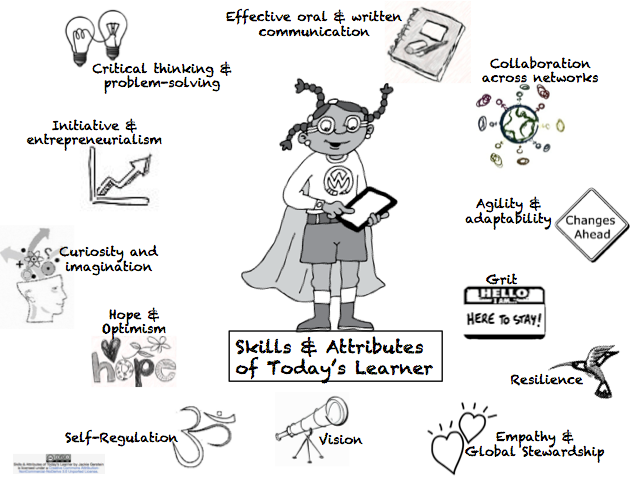
|
 
|

|
|
A Former Google Exec Reinvents Elementary Education
https://bit.ly/1fpnMMN A Former Google Exec Reinvents Elementary Education By Putting An R&D Lab In School Can this one-room school with a Silicon Valley approach scale up a more personalized model for educating kids? AltSchool, a private company backed by $4 million from seed investors, opened its first school location September 2013 in San Francisco. With a staff now comprised half of former Google engineers and the rest mostly educators, AltSchool’s mission has two focuses. The first is to grow a network of excellent elementary schools that harken back to the single-room schoolhouses of long ago, and the second, as any tech startup would do, is to use the schools as labs to learn, iterate and improve on the model. AltSchool - What is AltSchool from AltSchool on Vimeo. |
|
|
|
|
|
Shamblesguru's Live Twitter Stream
https://twitter.com/shamblesguru Tweets by @shamblesguru |
|
|
|
|
|
Microsoft Vision of the Classroom of the Future
https://youtu.be/aJu6GvA7jN8 |
|
|
|
|
|
Abundant Learning ppt [Will Richardson] #ISTE13
http://www.slideshare.net/willrich45/iste13 Four Newish Ideas for Powerful Classrooms Iste13 from willrich45
|
|
|
|
|
|
Schools are doing Education 1.0 when ...
https://bit.ly/YR6LQz Schools are doing Education 1.0; talking about doing Education 2.0; when they should be planning Education 3.0 This post seeks to compare the developments of the Internet-Web to those of education. Education 3.0 is based on the belief that content is freely and readily available. It is self-directed, interest-based learning where problem-solving, innovation and creativity drive education. |
|
|
|
|
|
What 21st Century Educators Need To Learn To Survive
https://bit.ly/ZtxFo4 Teaching Skills: What 21st Century Educators Need To Learn To Survive What are the traits that would make for the ideal 21st teacher? What does an educational professional need to be or do to tune in and synchronize with the new realities silently emerging inside schools and educational environments? We know 21st century educators are student-centric, holistic and they are teaching about how to learn as much as teaching about the subject area. We know too, that they must be 21st century learners as well. But highly effective teachers in today’s classrooms are more than this - much more. |
|
|
|
|
|
10 Ways To Fake A 21st Century Classroom
http://www.teachthought.com/teaching/10-ways-to-fake-a-21st-century-classroom/ 10 Ways To Fake A 21st Century Classroom It’s 2013, so whatever you’re doing in your classroom right now is technically 21st century learning. Semantics aside, we all can improve, and many of us are being held accountable for improvement by administrators, blogs, and the local PLC to “bring the next generation into the 21st century.” With that kind of pressure—and constant district walk-throughs—it may be necessary for you to fake a 21st century thinking and learning environment to make the right kind of impression with the right people, and give the appearance of forward-thinking. |
|
|
|
|
|
A School Leader's Guide to 21st Century Learning #educon
https://bit.ly/VibNqA A School Leader's Guide to 21st Century Learning #educon Presentation (Conversation) at #educon 27 Jan 2013 educonphilly.org An innovation conference where we can come together, both in person and virtually, to discuss the future of schools. Every session will be an opportunity to discuss and debate ideas — from the very practical to the big dreams. |
|
|
|
|
|
Learning in the Digital Age : A Bill of Rights
http://chronicle.com/article/The-Document-A-Bill-of/136781 A Bill of Rights and Principles for Learning in the Digital Age Theis document, drafted by a dozen educators brought together by the MOOC pioneer Sebastian Thrun, proposes a set of “inalienable rights” that the authors say students and their advocates should demand from institutions and companies that offer online courses and technology tools. |
|
|
|
|
|
The Utopian School: If you build it, will they come? #educon
https://bit.ly/VEaRgf Presentation (Conversation) at #educon 26 Jan 2013 educonphilly.org An innovation conference where we can come together, both in person and virtually, to discuss the future of schools. Every session will be an opportunity to discuss and debate ideas — from the very practical to the big dreams. |
|
|
|
|
|
Seth Godin the future of education
http://www.ted.com/speakers/seth_godin.html |
|
|
|
|
|
21st Century Skills
http://www.imls.gov/assets/1/AssetManager/21stCenturySkills.pdf 21st Century Skills This project underscores the critical role of our nation’s (USA) museums and libraries in helping citizens build such 21st century skills as information, communications and technology literacy, critical thinking, problem solving, creativity, civic literacy, and global awareness. |
|
|
|
|
|
Study: '21st-Century Learning' Demands Mix of Abilities
https://bit.ly/NYEaqe Study: '21st-Century Learning' Demands Mix of Abilities The modern workplace and lifestyle demand that students balance cognitive, personal, and interpersonal abilities, but current education policy discussions have not defined those abilities well, according to a special report released by the National Research Council of the National Academies of Science in Washington. |
|
|
|
|
|
In Classroom of Future, Stagnant Scores
http://nyti.ms/qwTy0p In Classroom of Future, Stagnant Scores The digital push here aims to go far beyond gadgets to transform the very nature of the classroom, turning the teacher into a guide instead of a lecturer, wandering among students who learn at their own pace on Internet-connected devices. Since 2005, scores in reading and math have stagnated in Kyrene, even as statewide scores have risen. |
|
|
|
|
|
TED Talks About The Future Of Education
https://bit.ly/lmQSlJ 8 Great TED Talks About The Future Of Education And Teaching These talks offer insights, concerns, and inspiration while discussing today’s educational practices and shortcomings, from a variety of perspectives. |
|
|
|
|
|
IMAGINATION: Creating the Future of Education and Work
http://creatingthefuturetoday.com IMAGINATION: Creating the Future of Education and Work The research and field work covered in this project began in January 2009. Rather than publishing results as a book or white paper, both of which are one-sided approaches to a subject that demands a conversation, an interactive site was chosen as the format. | The Culture of Games | Inside the “Virtual Cave” | Immersive Training Spaces | Worlds Disappearing | Hybrid Education | A Modern Classroom | Learning from Robots | Collapsing Time and Distance | Creating Avatars | A New Way to See | Social Media | Media Trend | Flip Thinking | The Cloud | Learning Experiments | Finding Epic Meaning | Focus on STEM | Charter Schools | Quest to Learn | Creativity & Agility | Empathy & Vision | The Future of Work | Beating the Talent Mismatch | Workflow | Creating Jobs | Here I Stand | The Economic Machine | Grants | |
|
|
|
|
|
Charles Leadbeater: Education innovation in the slums
http://www.ted.com/talks/charles_leadbeater_on_education.html |
|
|
|
|
|
Learning to Change
https://bit.ly/gImLnK |
|
|
|
|
|
Shamblesguru 'Did You Know' Video Picks on Youtube
http://www.youtube.com/view_play_list?p=3ED27A4E77FBB685 |
|
|
|
|
|
Sir Ken Robinson: Bring on the learning revolution!
http://www.ted.com/talks/sir_ken_robinson_bring_on_the_revolution.html &introDura |
|
|
|
|
|
21st Century Learner
http://prezi.com/ptlbrqtcbqgd/21st-century-learner-me2/ |
|
|
|
|
|
21st Century Skills
http://www.techlearning.com/Video |
|
|
|
|
|
NCTE Framework for 21st Century Curriculum
http://www.ncte.org/governance/21stcenturyframework NCTE Framework for 21st Century Curriculum and Assessment In the 1990s, the National Council of Teachers of English and the International Reading Association established national standards for English language arts learners that anticipated the more sophisticated literacy skills and abilities required for full participation in a global, 21st century community. The selected standards, listed in the appendix, served as a clarion call for changes underway today in literacy education. Today, the NCTE definition of 21st century literacies makes it clear that further evolution of curriculum, assessment, and teaching practice itself is necessary. |
|
|
|
|
|
About the Digital Generation Project
http://www.edutopia.org/digital-generation About the Digital Generation Project |
|
|
|
|
|
Shamblesguru 'Future Education' Video Picks on YouTube
https://www.youtube.com/playlist?list=PLADC1049321BF651D |
|
|
|
|
|
The Flat Classrooms Debate
http://www.futureofeducation.com/forum/topics/the-flat-classrooms-debate The Flat Classrooms Debate Recording of presentations by ... - Tom Friedman interview - Don Tapscott interview |
|
|
|
|
|
Future of Education : Social Network
http://www.futureofeducation.com/ Future of Education : Social Network (Ning) Charting the Course of Education and Learning in a Networked World This community is devoted to providing an opportunity for those who care about education to share their voices and ideas with others. It's a place for thoughtful discussion on an incredibly important topic. |
|
|
|
|
|
Don Tapscott, Grown Up Digital
http://twit.tv/natn79 Don Tapscott, Grown Up Digital Don Tapscott, author of "Grown Up Digital" and other books on technology trends. An excellent interview (podcast) with Don Tapscott about students growing up in a digital age .... full of optimism ... informed by an very comprehensive survey of youngsters. A highly recommended listen More info can be seen at Wikipedia |
|
|
|
|
|
21st Century Skills, Education & Competitivenes
http://adjix.com/h2fw Report Identifies Inherent Link Between a 21st Century Education System and Economic Success The report, 21st Century Skills, Education & Competitiveness, finds that the United States, in order to be globally competitive and for states to attract growth industries and create jobs, requires a fresh approach to education that recognizes the importance 21st century skills play in the workplace. Sponsored by the Partnership for 21st Century Skills, Ford Motor Company Fund, KnowledgeWorks Foundation and the National Education Association, the report notes that the country’s economic output has changed dramatically over the past 30 years and there is no sign this trend will stop. |
|
|
|
|
|
Dare to Dream Conference
http://www.rogerstv.com/option.asp?lid=132&rid=4&mid=13&oth=1 Dare to Dream Conference Presentation given were recorded and the video+audio are available online ... with topics The Six Secrets of Change : Keynote speaker Michael Fullan, Author, Former Dean of OISE/University of Toronto Technology and Literacy, the New Frontier : Keynote Speaker Rob Policicchio. See how technology can be integrated into the classroom and how it can enhance presentation and projects. Leadership and Learning : Keynote speaker Dr. Brian McNulty, Vice President, Leadership Services, Leadership and Learning Centre, Denver Colorado If You Can't Believe It, You'll Never Achieve It : Keynote speaker Carl Boyd, Advice Teacher, Arizona, USA Preparing Students for a Changing World : Keynote speaker Dr. Willard R. Daggett, President, International Centre for Leadership in Education What Really Matters for Struggling Readers : Keynote speaker Richard Allington, Past President, International Reading Association, Professor of Education, University of Tennessee Getting Immersed in a Bookworld : Keynote speaker Richard Allington, Past President, International Reading Association, Professor of Education, University of Tennessee Affiliation Dreaming the First Free South African University Out of Nothing : Keynote speaker Dr. Teddy Belcher, CEO of CIDA City Campus, South Africa Leading Edge Learning Panel Discussion : With moderator Dr. Willard R. Daggett, President, International Centre for Leadership in Education Education Minister Kathleen Wynne |
|
|
|
|
|
Future Education : Videos and PowerPoints
http://futureeducationvideos.blogspot.com/ The link above goes to one of the Shambles "Forest of Theme Blogs" pages that provides videos and other multimedia resources to support the topic here. If you would like to see all of the Theme Blogs then go to the full list at http://www.shambles.net/blogforest or click where you see this button 
|
|
|
|
|
|
TIME Magazine Article (Jan 2007)
http://www.time.com/time/magazine/article/0,9171,1568480,00.html How to Bring Our Schools Out of the 20th Century: TIME Magazine Article (Jan 2007) American schools aren't exactly frozen in time, but considering the pace of change in other areas of life, our public schools tend to feel like throwbacks. Kids spend much of the day as their great-grandparents once did: sitting in rows, listening to teachers lecture, scribbling notes by hand, reading from textbooks that are out of date by the time they are printed How To Build a Student For the 21st Century The world has changed, but the American classroom, for the most part, hasn't. Now educators are starting to look at what must be done to make sure our kids make the grade in the new global economy |
|
|
|
|
|
Copenhagen Institute for Futures Studies
http://www.cifs.dk/en/default.asp Every day companies and organisations make decisions, that is, strategic decisions of great importance for the future. Decisions that often have to be made quickly. Contributing with knowledge and inspiration, the Copenhagen Institute for Futures Studies supports decision-making. We identify and analyse trends that influence the future nationally and internationally. Through research, analyses, seminars, presentations, reports, and newsletters, we give advice on the future. The objective of the Copenhagen Institute for Futures Studies is to strengthen the basis for decision-making in public and private organisations by creating awareness of the future and highlighting its importance to the present. The work of the Institute is interdisciplinary. The staff represents various fields of academic and professional backgrounds such as economics, political science, ethnography, psychology, engineering, PR and sociology. future | school | schools | organisations | |
|
|
|
|
|
Classroom of the Future
http://www.cs.umd.edu/hcil/kiddesign/cof.shtml There is ongoing debate as to what role technology should play in the classroom. The concerns become ever greater when researchers discuss early childhood education. We are exploring the possibilities for the Classroom of the Future by partnering with students and teachers at The Center for Young Children in College Park, Maryland and Yorktown Elementary School in Bowie, Maryland. The aim of this five-year National Science Foundation funded project is to foster innovation in both the development and use of new educational technologies. Research in the area of educational technologies generally focuses on the impact technologies can have on children and teachers, as opposed to the impact that children and teachers can have on the development of new technologies. classroom | future | |
|
|
|
|
|
21st Century Learning Initiative
http://www.21learn.org/ A transnational program ..... |
|
|
|
|
|
Center for the Future of T & L
https://thecenter.wested.org/ The Center for the Future of Teaching and Learning is made up of education professionals, scholars, and public policy experts, who care deeply about improving California's public schooling. The Center was founded in 1995 as a public, nonprofit organization with a clear purpose: to increase the capacity of California's teaching work force to provide a rigorous and balanced curriculum that challenges students' learning potential and ensures their continuing intellectual, social and ethical development. |
|
|
|
|
|
New Horizons for Learning
http://education.jhu.edu/PD/newhorizons/ A virtual 2000+ building |
|
|
|
|

| use this box to search more on Shambles (powered by Google) : safe filtering is ON | |||

|

Custom Search
|
||
|
Custom Search
|
|
|
webpage with others |
|
 |
|
.jpg) |
|
.jpg) |
|
|
|
|
|
| |
©
copyright The Education Project Asia |
|
 |
|
QR Code Shambles mobile gif.gif) |
|
.jpg) |
|
.jpg) |


.jpg)
jpg.jpg)
jpg.jpg)


